A U.S. Scientist Reveals the Strange 15-Minute Sound Frequency That May Activate a “Memory Protein” — Without Supplements, Brain Exercises, or Radical Diet Changes
IMPORTANT HEALTH UPDATE May take up to 10 seconds to load.
Make sure your sound is on
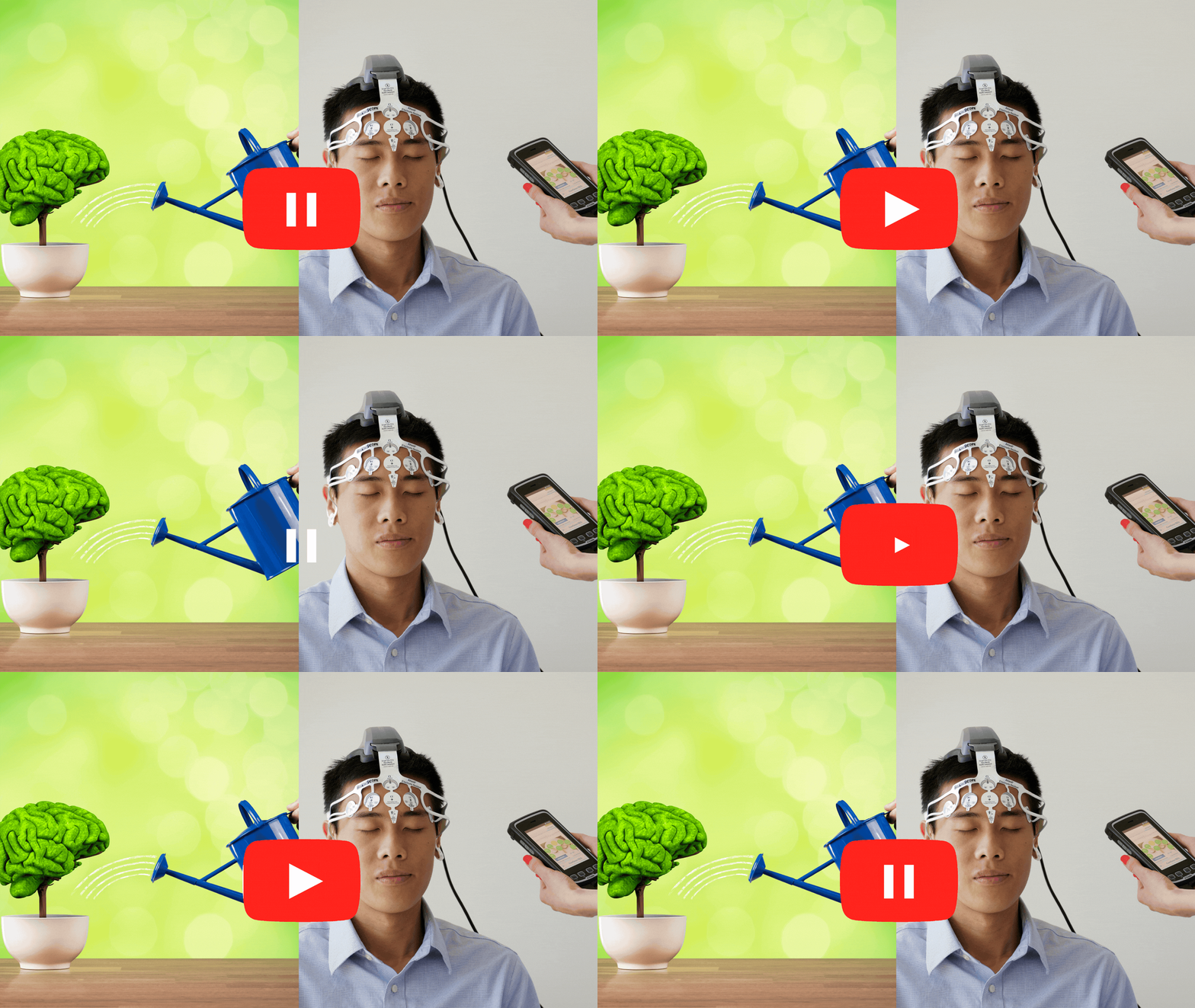
Have you ever walked into a room and, for a few seconds, completely forgotten why you were there?
Or maybe you’ve noticed that certain words, names, and details that used to come to you naturally now seem to disappear right when you need them most.
And if you’ve already tried supplements, brain exercises, Sudoku, or even meditation but still deal with that frustrating mental fog, you’re definitely not alone. In fact, this exact experience is what led researchers to look for a different explanation.
The problem is that these little memory lapses can start affecting much more than your memory.
They can make you avoid certain conversations, lose confidence when learning something new, and even make you feel like you’re falling behind the people you love.
Over time, that simple feeling of “brain fog” can become especially frustrating during the moments when you most want to be present — family conversations, meetings, trips, and special occasions.
🔄 But What If It’s Not Simply Aging?
For years, many people simply accepted that forgetting more things was an inevitable part of getting older.
But a discovery presented by researchers suggests a different possibility: there may be a mechanism inside the brain connected to memory that becomes less active as the years go by.
And here’s where things get really interesting.
The presentation suggests that we’re constantly exposed to different substances in our environment — including heavy metals, pesticides, and other pollutants — and that this exposure may be connected to brain health.
That’s exactly where this story begins to take an unexpected turn.
🧠 The Discovery
The researcher featured in the story, Dr. Brian Johnson, says he was trained at Johns Hopkins and spent years investigating a simple way to stimulate this mechanism without relying on traditional approaches.
The clue came from research involving a protein known as BDNF, which the presentation describes as a kind of “memory protein.”
According to the story, some research found higher levels of this protein in older people who performed better than expected on memory-related tasks.
Then came the part that sounds almost like something out of a science-fiction experiment: researchers reportedly identified a specific sound frequency capable of stimulating this mechanism.
Instead of pills, complicated diets, or hours of mental exercises, the idea was to turn that frequency into a simple audio experience you can use at home for about 15 minutes a day. The presentation claims testing increased BDNF by as much as 150%.
👥 And Some People Started Noticing a Difference
The presentation claims that 16,366 Americans have already been using the audio experience every day.
One of the stories comes from Donna Clark in Houston, who said her memory felt clearer and surprised her husband by remembering details from a prom 52 years ago.
Another story comes from Marcia Gentry in Florida, who said she noticed a significant change in her feeling of “brain fog” after roughly 3 weeks.
⏳ Watch While the Video Is Still Available
The full discovery — including the explanation behind the frequency, the protein connected to memory, and how researchers arrived at this approach — is revealed in the video.
If you want to understand why this approach is different from the supplements and brain exercises you may already know about, it’s worth watching the full presentation before it becomes unavailable.
Copyright © 2024 Health Pro News LLC – All Rights Reserved
This site and the products and services offered on this site are not associated, affiliated, endorsed, or sponsored by Clickbank, nor have they been reviewed, tested, or certified by Clickbank.